

Modern Indonesia and the Evolution of Power
Indonesia's modern history, the enduring role of its Army, and what the election of Prabowo Subianto means for the democracy born out of the Asian Financial Crisis.
 Maxime Klatten·Portfolio Manager & Fund Manager
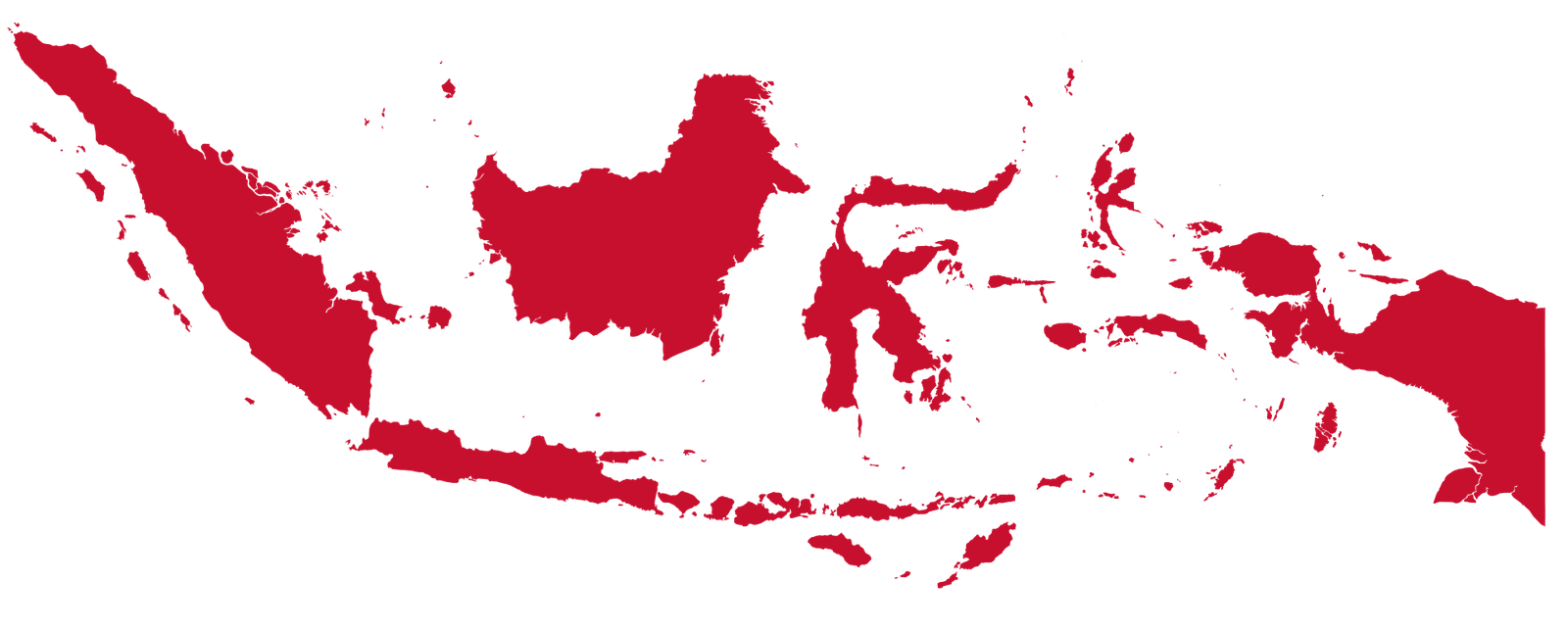
Despite being the world's fourth most populous country, Indonesia and its approximately 290 million inhabitants remain largely unknown, if not ignored. Most people would reduce it to Bali, some would remember the spice islands, and those reading the newspapers would call it "the largest Muslim country in the world". It is also the largest archipelago in the world with about 18,000 islands stretching over 5,000km from west to east.
The country is currently going through some political and economic turmoil. A stock market crash, a currency at record lows, and mass protests that are driven by both political and economic grievances. At the centre of it all, the recently elected President Prabowo Subianto. The former general is the heir of the Suharto regime which ruled over the country for three decades until 1998. Prabowo could be the most serious test for the democracy that emerged out of the ruins of the Asian Financial Crisis.
We thought it would be interesting to review Indonesia’s modern history to understand the current political situation and the crucial role of the Indonesian Army. Indonesia is after all, our largest neighbour.
Sukarno’s Merdeka (Independence): from Liberal to Guided Democracy, 1945–1965
Independence was proclaimed on the 17th August 1945 by Sukarno and Hatta, following the surrender of Japan two days earlier.
After centuries of Dutch colonial rule, the Netherlands, did not take the news too kindly and a bloody, 4-year long war ensued before the transfer of sovereignty in December 1949. Indonesia adopted a provisional constitution inspired by Western parliamentary democracy. Indeed, most of the then Indonesian political leaders had lived and studied in the Netherlands.
The newly independent country first started with a “Liberal Democracy” from 1950 to 1959 under the presidency of Sukarno. The state philosophy to this day is to be found in Pancasila, the five principles which Sukarno introduced first in 1945:
- The belief in one God (no mention of Islam);
- Just and Civilised Humanity (human rights);
- Unity of Indonesia (national motto is Unity in Diversity);
- Democracy by consensus;
- Social Justice.
Despite his role as President being largely ceremonial, his popularity and legitimacy gave him outsized influence. The elections in 1955, arguably the only genuinely free elections until 1999, produced a fragmented parliament that did not improve governmental stability. Indonesia went through 7 governments across the 1950–1959 parliamentary period. The instability was not only political with four major parties sharing the parliament, but also religious with secular nationalists against political Islam, and geographical with Java against the Outer Islands. Those sources of instability have remained a danger to the unity of Indonesia to this day.
Sukarno gained international fame by being a key founder and architect of the Non-Aligned Movement. He organized the conference of Bandung in 1955. The guests were 29 Asian and African states, with some of the most charismatic leaders attending such as Nehru (India), Nasser (Egypt), Zhou Enlai (China) or U Nu (Burma).
While the anti-colonialism stance of the conference was rather common at this time, the Cold War neutrality declaration was more remarkable. Indeed, those countries refused to align with either of the two blocks and sought to develop economic cooperation within their group. This “non-aligned” philosophy will remain a key feature of Indonesian foreign policy.
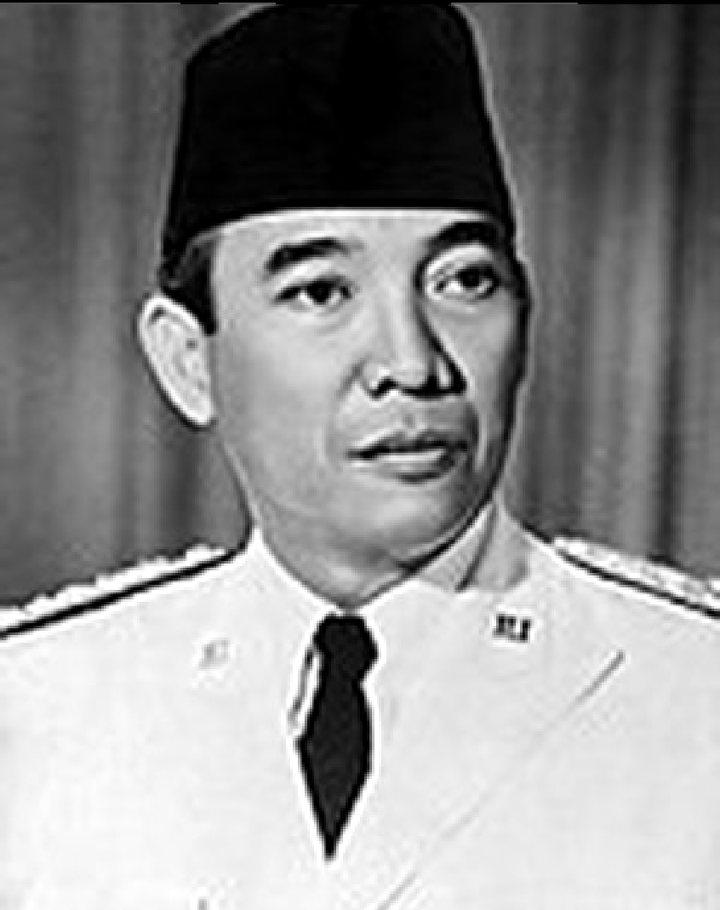
The growing domestic instability was in sharp contrast with Sukarno’s rising international stature recognition and ambition. He used his popularity to declare martial law in 1957, sidelining the parliament with military-backed emergency powers. In 1959, he dissolved the deadlocked Constituent Assembly and reinstated the 1945 constitution, which concentrated the power in the presidency. The “Liberal Democracy” gave way to a “Guided Democracy” with the crucial support of the Army. The military leadership was a main beneficiary of martial law. It received institutional power in the form of regional administration; businesses seized from the Dutch and internal security powers. Guided Democracy resulted in an awkward tripod: Sukarno, the (anti-communist) Army and the Communists of the Partai Komunis Indonesia (PKI). Many Islamic parties were restricted or dissolved following involvements in regional rebellion against the central government. The remnant religious wing (NU) was close to the government and anti-communist.
Sukarno sought to balance the Army’s influence by protecting the PKI and nominating its leaders to positions in his government. To many, he seemed to pave the way to power for the communists. The PKI pursued a legal, parliamentary strategy rather than armed insurgency, which was unusual for a communist party at the time.
On the international stage, Sukarno’s foreign policy radicalised as he launched Konfrontasi in 1963, an aggressive policy against the newly formed Federation of Malaysia (which included Singapore until 1965), viewed as a tool of British and by extension American Imperialism. Acts of sabotage, bombings and jungle operations in Borneo continued until the Bangkok Accords in 1966 and led to the creation of ASEAN (Association of SouthEast Asian Nations) in 1967. This break with the West called for closer ties with China and there were talks of “Jakarta – Phnom Penh – Hanoi – Peking – Pyongyang axis”.
Domestically, land reforms detrimental to conservative landlords in the early 60s led to rural violence. A few years later, in 1965, the PKI proposed creating an armed “Fifth Force”, which Chinese Premier Zhou Enlai promised to support with arms supply. This militia of armed workers and peasants would be independent from the current 4 forces of the Army (army, air force, navy, police). Unsurprisingly, the Army was dead set against the proposal and blocked it.
All along, and despite his growing support of the PKI, President Sukarno was the balancing factor. His health visibly declined in mid-1965 due to a kidney disease. He had no successor and no institutional succession mechanism existed.
To sum up, end of 1965, Indonesia had a dying President with no succession plan; a powerful communist party claiming over 3 million members and recently rebuffed on its Fifth Force proposal and feeling cornered; a defensive Army convinced of an imminent attack from the PKI; rural violence following the land reforms; and a foreign policy that alienated the West while strengthening ties with communist China.
We have mentioned several times Chinese involvements in Indonesian politics. It is also worth looking at the American position. During the Cold War, the Domino Theory influenced US foreign policy. This theory held that if a country would fall to communism, regional neighbours would succumb in succession through a mix of ideological contagion, material support from the fallen state in search of allies, and loss of US credibility emboldening local communist parties. While Vietnam was obviously a worry, it was still a divided country, poor and relatively small. Indonesia was rich in essential natural resources (oil, rubber, tin etc..), had a population of approximately 90 million (to Vietnam approximately 30 million), was strategically positioned across international shipping lanes and close to Australia. Indonesia was the biggest domino and was already tilting. If Indonesia fell, it was thought the whole of South-East Asia would soon follow. This theory would explain why the coming events would not draw more adverse reactions from the US and its allies.
Military Autocracy: Suharto and the New Order, 1965–1998
In the early hours of 1st October 1965, a group (30 September Movement) composed of military mid-level officers and figures with PKI links abducted seven of the army’s most senior generals. Six of them died within hours, assassinated at their homes or at the group’s base. Their objective was to prevent a coup by a “Council of Generals” with the alleged support of the CIA. The group announced the dissolution of Sukarno’s government.
General Suharto, notably not targeted despite being a senior general, swiftly moved to assume the command of the army and crushed the insurrection. Suharto and the Army immediately blamed the PKI and used the military-controlled press to picture the PKI as morally monstrous. What followed was a mass killing of the PKI members and sympathisers which lasted till mid of 1966. Estimates of the dead range from 500,000 to over a million. To this day however, the relationship of the group with the PKI remains contested.
In his book “the Jakarta Method”, Vincent Bevins affirms the CIA provided the Army with lists of communists and actively contributed to the hunt. The writer argues that the “success” of this method was such that it served as a blueprint in South America to help establish other military backed governments and to repress communist activity. While the US had little active influence in the regime change, they certainly supported Suharto thereafter.
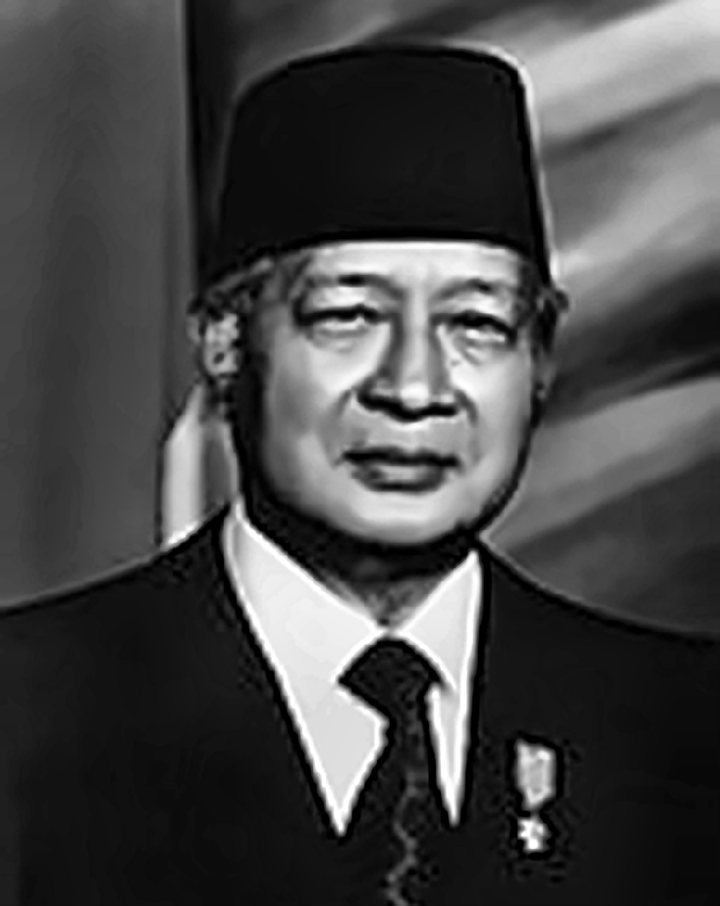
Sukarno was formally removed in 1967, and Suharto became the President in 1968, elected by the People’s Consultative Assembly (MPR). That Assembly included the members of the parliament, regional representatives and representatives of societal groups. The MPR subsequently re-elected Suharto to six further five-year terms.
The same 1945 constitution remained, and his New Order was presented as a return to the authentic and undistorted implementation of the original Constitution and Pancasila. Following the same idea, the Army’s legitimacy took its roots in the people, a citizen’s militia born of the independence struggle and therefore a force to protect that very independence. The Army had not just a defence role, but a legitimate political and social function, a doctrine known as Dwifungsi (Dual Function). Therefore, Suharto set to establish Dwifungsi as a permanent constitutional principle. This translated into:
- Guaranteed parliamentary seats: the army, of which Suharto was the chief, could appoint 75 seats while another 25 seats would be appointed by the regime; usually friendly technocrats. 100 seats out of the 460 the House of Representatives counted until 1987, when it grew to 500 seats;
- Territorial command, which gave the army permanent surveillance and intervention presence in everyday civilian life nationwide, also justified by the peculiar geography of this country;
- Golkar (Functional Groups), the New Order’s dominant political vehicle and still a major party today. It formally came to existence in 1964 thanks to the Army and was conceived as a counterweight to the PKI. The party would represent societal functions rather than ideological blocs like teachers, farmer’s associations, business groups. Military personnel and civil servants were heavily pressured into supporting it.
- Economic influence: military-run foundations (yayasan) and off-budget business holdings gave the armed forces direct financial interests across sectors, insulating the institution from needing full state budget allocations and creating pervasive military-business entanglement that persists in weaker form today.
The persecution of communists did not end with the killings mid-1966. Detentions without trials on the infamous and remote Buru island (Maluku) would go on until 1979 when it was dismantled following international pressure. While less dramatic, oppression became institutionalised and went on for decades. ID cards for former political prisoners and anyone deemed to have PKI associations would bear the mark ET (eks tahanan politik, former political prisoner). Civil servants had to certify they and their family had no links with the PKI. This extended over generations. ET marked individuals would be excluded from religious burial rites, universities and would find it difficult to register their marriage. Social stigma was severe and extended across generations.
Suharto inherited a country in ruin. Hyperinflation and a default on government debt cut off the country from any international help. The General called a small group of Western educated (mostly from the University of California, Berkeley) Indonesian economists, dubbed the “Berkeley Mafia”. The group promptly reversed Sukarno’s socialist and isolationist policies and introduced pro-market reforms. The results were immediate: inflation fell from 650% in 1966 to 13% by 1969. Growth averaged 6.5% annually until the 1997 crisis. The 1970s oil boom saw oil and gas reach over 70% of Indonesia’s export revenues by 1980. Suharto progressively directed those revenues towards family-controlled conglomerates. Vested interests undermined the power of the “Berkeley Mafia” as the regime turned to crony capitalism, which conveniently allowed for a tighter control of society. It is worth noting that absolute poverty dropped from 60% of the population in 1970 to 11% by 1996. But the incredible wealth accumulated by a tiny circle of cronies and their largely Chinese ethnicity also exacerbated tensions when the Asian crisis pushed back many Indonesians into poverty. It would boil and erupt in ethnic riots in 1998.
The Asian Financial Crisis started in July 1997 in Thailand, when the Thai government had to abandon the peg to the USD. The capital flight that ensued triggered an international chain reaction which had a tremendous impact on Indonesia. In 6 months, the Indonesian Rupiah lost 80% of its value to the USD. The GDP plunged by 13% and inflation spiked to 65% in 1998. Decades of crony capitalism, weak regulation and unbridled credit growth left local banks completely insolvent. The IMF bailout package of USD40bln arguably did more damage than good. The immediate closure of 16 banks without any deposit insurance scheme triggered bank runs across the country. The IMF also directly targeted the entrenched system of crony capitalism by demanding the abolition of the national car project and the lucrative clove monopoly both run by Suharto’s son, Tommy and other state monopolies on basic food imports like wheat, flour and soybeans. Forced budget cuts deepened the crisis, but it was the brutal elimination of state subsidies on necessities like kerosene, electricity and food that were the direct catalyst for the deadly riots of May 1998. The repression of peaceful student protests caused violent riots in Jakarta and other major cities. The students successfully occupied the parliament and demanded Suharto resignation. Suharto political allies and government deserted him. The last straw was the Army chief advising him it could no longer guarantee order or protect his presidency. Nine days after the students began protesting, Suharto resigned on the 21st of May 1998, after 31 years in power.
Reformasi and Democratic Erosion, 1998 – present
Habibie, Suharto loyalist and vice-president, assumed the presidency upon the former general’s resignation. Despite his New Order pedigree, the reforms came aplenty and quickly. Press freedom was restored and political party formation freed. A major check of the new democracy was the establishment of the Constitutional Court in 2003 under the new President Megawati Sukarnoputri, daughter of Sukarno. The Court allows ordinary citizens to challenge national laws that violated their constitutional rights for the first time.
Timor-Leste had been a festering thorn in Indonesia politics for 24 years and the cause of intense international pressure. To the astonishment of the Army, Habibie ordered the withdrawal from Timor-Leste and a referendum that would take place in August 1999. He believed the population would choose the generous autonomy package offered by the Indonesian authorities over independence. 78% voted for independence. Losing a quarter of its population to famine and military conflict over those 24 years of occupation apparently left people somewhat sceptical about the government good intentions. While the government accepted the result, the Army and the militia it had built and trained destroyed 70 to 80% of the infrastructure and over a 1,000 people were killed in a few weeks. International outrage, direct US threats to cut IMF bailout and World Bank funding, and a UN mandated force put an end to that scorched-earth campaign. Formal independence came in 2002.
It was clear from the very start that the most important reforms would be those of the Army. It may surprise that the first reforms were volunteered by the chief of the Army, the General Wiranto, who himself precipitated the fall of Suharto. Perhaps Wiranto was shrewd enough to realise that renouncing some power would allow the Army to keep more of it, rather than frontally oppose any reform and ultimately lose all influence. Wiranto formalised the new paradigm into four principles: defence, political neutrality, separation of military and police functions and restrained societal engagement to support democratic transition. That last principle emphasizes the idea of a progressive process over years, not a single act.
The Police became an independent force overseen by the Ministry for Political and Security affairs in 2001. The number of seats appointed by the Army was reduced progressively to nil in 2004. This coincided with Indonesia’s first direct presidential election, another important step towards full democracy. The TNI (the new acronym of the Army) law of 2004 officially banned active-duty military personnel from taking civilian government roles unless they officially resigned or retired. Active officers could only serve in 10 very specific, security-related civilian institutions. The law also required the government to takeover or shut down all businesses owned and operated by the military before October 2009.
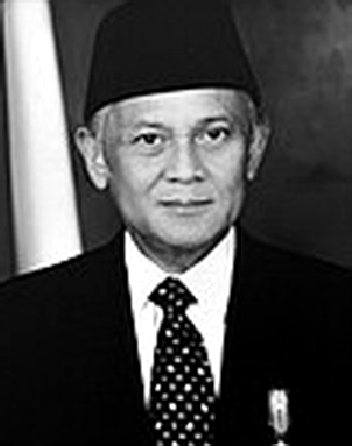 Habibie
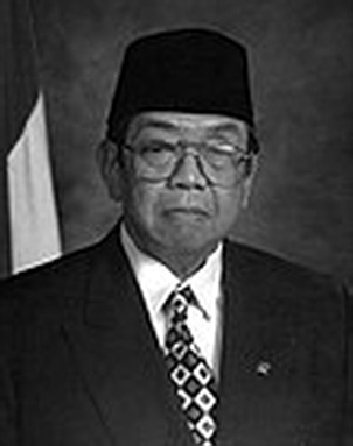 Wahid
Wahid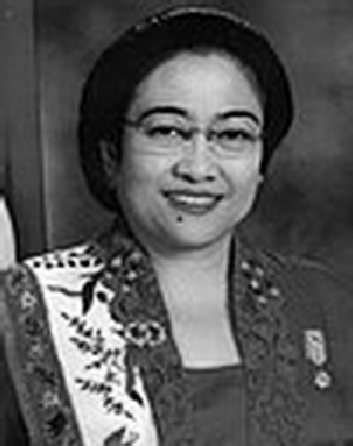 Megawati
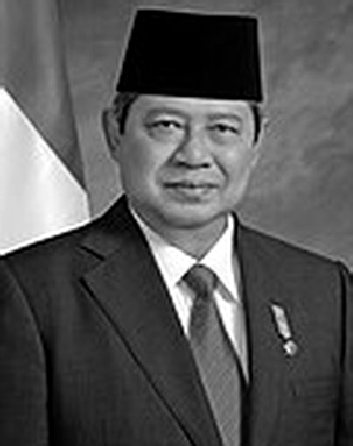 Yudhoyono
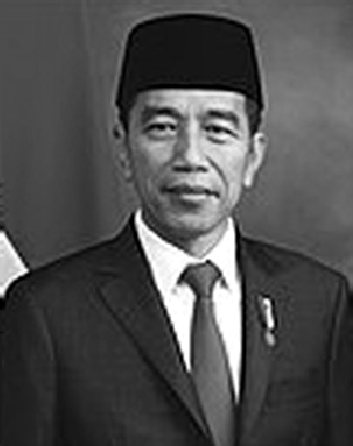 Widodo
So, what did the Army keep? It kept territorial command which gave it administrative presence down to village level. Officers continued to move into civilian political roles. In fact, two Generals became President since Suharto’s fall. The government allowed the Army to keep its network of cooperatives and foundations deemed to be designed for “troop welfare”. Many economic interests in logging, mining and banking were kept in those foundations.
Susilo Bambang Yudhoyono (SBY) was President from October 2004 to October 2014. The retired four-star general won the first two direct presidential election. He himself took advantage of the new party formation freedom by founding Partai Demokrat in 2001. His decade was peaceful and consolidated democracy. Power transferred smoothly at the end his two constitutionally limited terms.
The peaceful power transition was itself an optimistic testimony to Indonesian democracy. For the first time the new President Joko Widodo (aka Jokowi) was no product of the political, military or Sukarno-family elite, but a former furniture business owner. He started his political career as mayor of Solo (Java) and Jakarta Governor. He focused on Indonesia’s economic development by supporting infrastructure projects. His second term proved more testing as he floated a rejected proposal to extend his presidency for a third term. He proceeded to favour his family, most notably his eldest son Gibran Rakabuming Raka. Gibran was mayor of Solo like his father and benefited from a tailor-made amendment in the Electoral Law to run for Vice-President with Prabowo. This is one of the more shocking examples of judicial capture. While the Constitution Court refused to reduce the 40-year age required to run for President or Vice-President, it came up with a very convenient exception that fitted Gibran perfectly and would allow him to run with Prabowo. The President of the court was no other than Anwar Usman, brother-in-law of Jokowi and Gibran’s uncle by marriage. The ruling was issued 3 days before candidate registration opened. Prabowo confirmed Gibran as his running mate within a week.
Jokowi’s son-in-law Bobby Nasution ran under Prabowo party and was elected Governor of North Sumatra. Finally, his youngest son Kaesang Pangarep was made chairman of another party just 2 days after joining.
The reform of the 2002 established KPK (Corruption Eradication Commission) was another attack against an independent institution from the Reformasi years. The KPK was a response to the entrenched patronage economy of the Suharto years. While its record in pursuing high officials is inequal, the Commission was nevertheless respected and had high public trusts rating under SBY. In 2019, despite widespread public opposition, the founding statute was revised. The Commission went from a standalone status to a body under the executive government. The KPK employees were reclassified from independent agents to civil servants. A presidentially appointed supervisory board was given the authority to approve investigation powers that had previously been at the Commission’s discretion. The Commission still operates, but it is more vulnerable to conflicts of interests than ever before.
What about the new President? Prabowo Subianto is a former general of Suharto and married his daughter in 1983 and divorced in 1998 in the wake of Suharto fall. He was heavily involved in the war with Timor-Leste. He was the General of the Kopassus, Indonesia elite Special Forces and linked to killings of civilians in that region. His group funded and trained pro-Indonesia militia to persecute independence supporters. He was banned from entering the US for alleged war crimes. He was also busy domestically and directly ordered the abduction of 23 pro-democracy activists in Jakarta in 1997-1998. All were tortured. 9 were released, 1 confirmed dead and 13 remain officially missing and are presumed dead.
He founded his nationalist and right-wing party, The Great Indonesia Movement Party (Gerindra) in 2008. He ran and lost against Jokowi twice (2014 & 2019). He contested both elections results, which led to riots. He reconciled with Jokowi and became the Minister of Defence. His third bid for the Presidency proved successful, certainly helped by his association with Jokowi’s family.
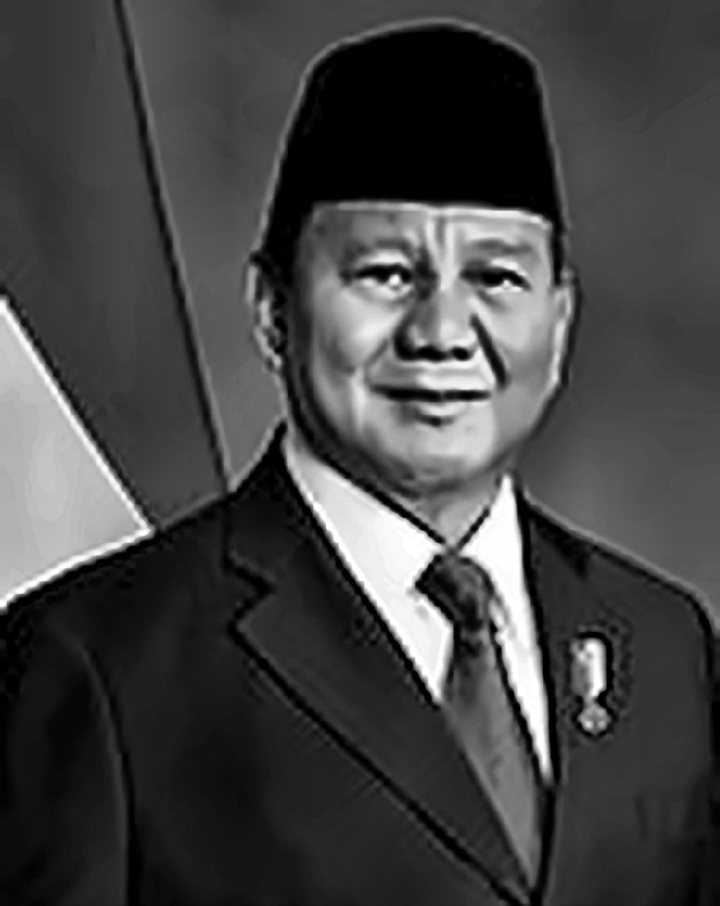
Prabowo’s personal and political ties to the New Order regime are no secret. His distaste for democracy is evident, from his resume to his endeavours to roll back some of the reforms adopted following Suharto fall. Namely the direct elections, the Constitutional Court, the term limits and the limitations to the Army’s influence.
Upon election, he swiftly attacked the TNI law of 2004. He added 4 additional agencies in which military personnel could fill in positions, one of which being the Attorney General’s Office. The military is now allowed to conduct operations against “modern or cyber threats” with the sole approval of the President. The vagueness of the term will allow for ample interpretation by both the President and the Army. Despite massive student protests and legal challenges at the Constitutional Court, the law went through.
Checks and balances are still there, but have been weakened, if not discredited:
- Constitutional Court: the Gibran ruling and its inconsistent stances, obvious conflict of interests completely discredited this institution;
- Parliament seems neutralized by Prabowo “all-inclusive” coalition, though such political alliances can be quickly undone;
- Press: the country’s Press Freedom Index dropped from a peak of 63 in 2019 to 43 in 2026, and the country fell 16 places to 127th of 180 in the 2025 RSF World Press Freedom Index;
- Civil society / NGOs: under permanent attack from the President himself;
- KPK (anticorruption commission): it has lost a lot of credibility when reformed in 2019 and could be a tool in the government’s agenda.
Since in power, Prabowo has introduced measures reminiscent of the New Order philosophy, that of a centralising, top-down and bureaucratic state. His flagship social measure in January 2025, free nutritious meals program targets over 80 million beneficiaries, mostly school children and pregnant. A costly measure (USD13bln, over 6% of the government budget this year, up to USD20bln next year), difficult to implement in a country of such geographic challenges and already faced with mass food poisoning scandals and naturally prone to corruption.
The Sovereign Wealth Fund, Danantara was launched in February 2025. It consolidates Indonesia’s state-owned enterprises under one holding structure managing over USD900bln in assets. Danantara reports directly to the President, bypassing both the Minister of Finance and the Minister of State-Owned Enterprises. The fund management was picked by the President. It issued in August 2025 USD3 billion of debt with a 2% coupon on 5 and 7 years. To compare with 5.9% and 6.20% paid on Indonesia debt at that time. 4% is the price of legal immunity it would seem. Indeed, Patriot bond buyers are shielded from any prosecution regarding the origins of the funds used. Besides the obvious risks of money laundering, it is easy to believe that no tycoon would want to be “left out” and risk unwanted attention.
In May 2026, Prabowo announced the state would take control of exports of Indonesia’s major commodities, namely coal, palm oil and nickel. The project consisted in routed all sales through a new state entity under Danantara called Danantara Sumberdaya Indonesia (DSI), which makes it equally presidentially controlled. The idea was to prevent export frauds that cost the government billions of USD in lost royalties. The backlash was brutal and the government partially reversed and the DSI was turned into an oversight and auditing body.
Following a true Suharto tradition, Prabowo family has not been forgotten. His ex-wife Titiek Suharto is under his party Gerindra. His younger brother, billionaire Hashim Djojohadikusumo, holds a formal senior position in the same party. While his only son is a fashion designer in Paris, 4 of his nephews and nieces are in the party.
A Return to Military Autocracy?
Following its independence in 1945, Indonesia managed 20 years of democracy brought and maintained by a charismatic Sukarno. It was a difficult balancing exercise for the leader, caught between the two dominating forces of the time that were the Army and the Communists.
The killing of the generals in 1965 would set off a chain of events that marked the end of Indonesian Democracy and the formal dominance of Suharto and the Army over the country politics. The Suharto regime fell following the Asian Financial Crisis of 1997. The autocratic nature of the regime and its crony capitalism, and the inept measures forced on the country by the IMF magnified the impact of the crisis. Massive protests and the subsequent fall of Suharto raised hopes for democracy. Despite the “new leaders” being from the old guard, Reformasi were real and swift, with direct elections, a Constitutional Court, an anti-corruption commission, term limits and a diminished Army.
It seems however that those forces have substantially weakened. First slowly during Jokowi’s second term. Nepotism was obvious, and it dealt the credibility of the Constitutional Court a massive blow. The change in the KPK (Corruption Eradication Commission) status to a body under the executive power raise serious doubt about its independence. The opportunistic reconciliation of Jokowi and Prabowo led to the election of the latter. Prabowo is a creature of the New Order regime, an heir to Suharto, bound to the Dictator by blood, through his wedding and his military record. His influence over a reinforced Army, his all-inclusive political coalition with no parliamentary opposition, and weakened institutions are all serious threats to democracy. Indonesia still has elections, courts, civil society and a politically active public, but the momentum is clearly in favour of the President and a potential revival of the New Order.
Annex — Presidents of Indonesia, 1945–Present
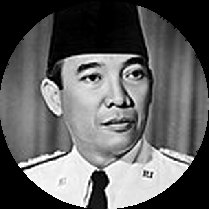 Sukarno1945–1967 · Independent / PNI
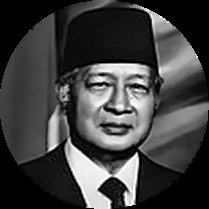 Suharto1967–1998 · Golkar
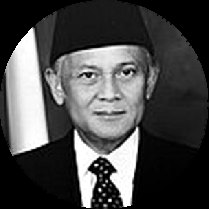 B.J. Habibie1998–1999 · Golkar
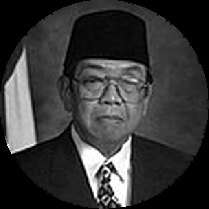 Abdurrahman Wahid1999–2001 · PKB
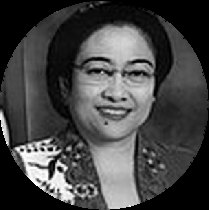 Megawati Sukarnoputri2001–2004 · PDI-P
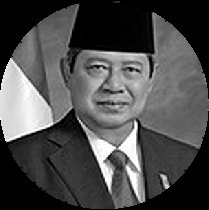 Susilo Bambang Yudhoyono2004–2014 · Partai Demokrat
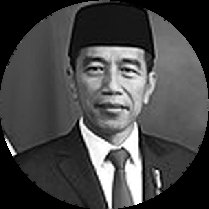 Joko Widodo2014–2024 · PDI-P
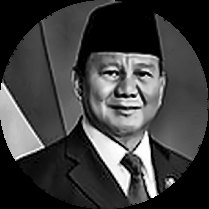 Prabowo Subianto2024–present · Gerindra
Sources
- Vincent Bevins, The Jakarta Method: Washington's Anticommunist Crusade and the Mass Murder Program that Shaped Our World (2020)
- David Van Reybrouck, Revolusi: Indonesia and the Birth of the Modern World (2020)
- CAVR, Chega! (2005) — the Timor-Leste Commission for Reception, Truth and Reconciliation's final report
- Komnas HAM (Indonesian National Human Rights Commission), 2005 report on the 1997–98 activist abductions, and its 2012 report on the 1965–66 killings as gross human rights violations
- Reporters Without Borders (RSF), World Press Freedom Index 2025
- Jakarta Post, "What ever happened in Kraras, Timor-Leste, 'Pak' Prabowo?" (2013)
- BPS (Badan Pusat Statistik)
- Jakarta Post, "Indonesia slides in global press freedom index"